
AI-Driven Revenue Operations
The Shift to Revenue Engineering
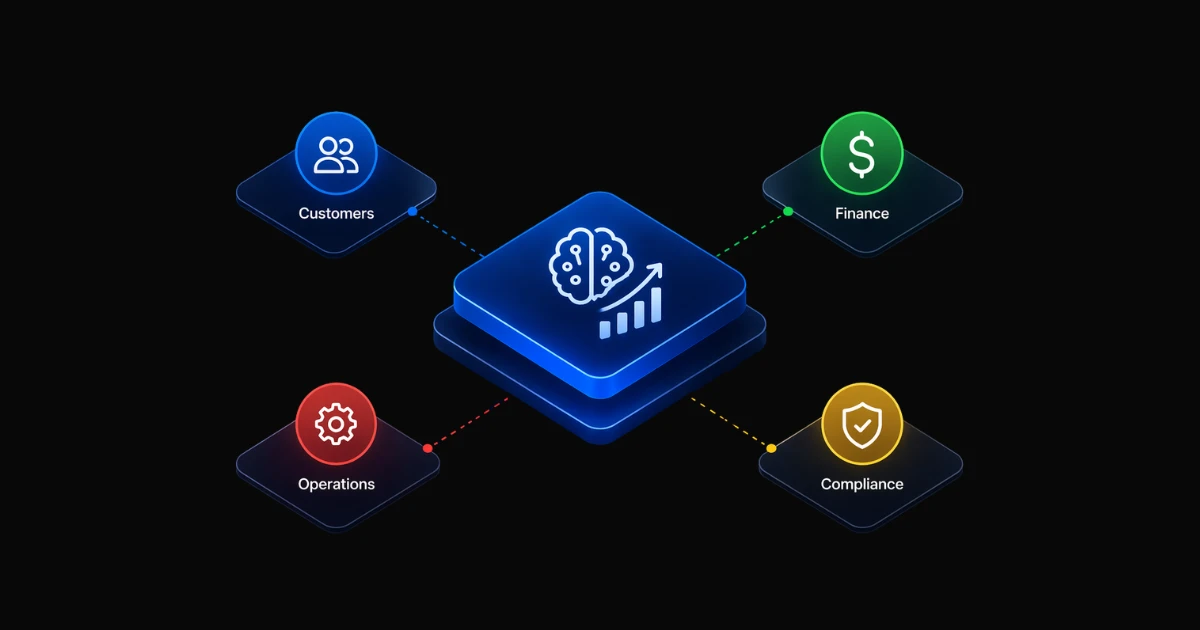
For the modern global enterprise, the traditional model of revenue generation—characterized by siloed departments and intuition-based forecasting—has reached its limit. Global B2B organizations frequently face significant revenue leakage and forecasting inaccuracy. This is primarily due to fragmented data and manual pipeline management processes that vary across disparate regions. To remain competitive, organizations must adopt a comprehensive AI Revenue Operations Strategy. This strategic theme involves moving from intuition-based sales management to data-driven revenue engineering. By unifying the revenue layer, organizations can unlock predictive precision, automated efficiency, and scalable growth at a global scale.
Step 1: Data Unification & Hygiene
Step 2: Predictive Intelligence Layering
Step 3: Process Automation & Governance
Step 4: Cross-Functional Alignment
Step 5: Continuous Revenue Optimization
Regional Strategic Nuance: US vs. UK/EU
- United States: The US market currently shows high maturity in AI adoption. The strategic focus here is often on predictive forecasting and aggressive tool consolidation to drive maximum efficiency.
- UK and Europe: In the UK/EU context, there is a much stronger emphasis on GDPR-compliant data handling and robust governance within automated workflows. Success in this region requires balancing AI-driven automation with stringent privacy standards and regulatory oversight.
While the US focuses on the speed of predictive insights, the EU/UK focus is often on the integrity and compliance of the automated processes.
Measuring Impact via the KPI Matrix
1. Forecast Accuracy (+/- 5% variance)
2. Sales Cycle Velocity (Days to Close)
3. Revenue Leakage Reduction (%)
4. CAC Payback Period (Months)
5. Pipeline Coverage Ratio
Conclusion
Transitioning to an AI Revenue Operations Strategy is no longer an optional upgrade for global B2B enterprises; it is a strategic necessity. By following the five steps of the Canonical Framework—from Data Unification to Continuous Optimization—leaders can eliminate the inefficiencies of intuition-led silos and replace them with a unified, intelligent revenue engine. The result is a scalable, predictable, and highly efficient organization capable of capturing value at a global scale.
Executive Summary
- Revenue Transformation: Global B2B enterprises are shifting from fragmented, intuition-led sales silos to a unified, AI-engineered revenue machine that predicts and captures value with precision.
- Systemic Unification: The framework eliminates revenue leakage and forecasting inaccuracy by consolidating disparate data across marketing, sales, and customer success.
- Predictive Precision: By layering AI onto unified data, organizations can achieve high-level Forecast Accuracy (+/- 5% variance) and real-time churn risk identification.
- Operational Efficiency: Strategic automation of routine workflows and pipeline discipline significantly reduces administrative burdens while accelerating Sales Cycle Velocity (Days to Close).
- Global Scalability: Tailoring the AI Revenue Operations Strategy to regional nuances—such as US tool consolidation and UK/EU GDPR governance—is essential for sustainable global growth.
Key Takeaways
Data Integrity
Moving from fragmented silos to a single source of truth via automated cleansing.
Predictive Layering
Transitioning from reactive management to real-time probability-based scoring.
Process Governance
Enforcing strict sales stage entry/exit criteria through automation.
Alignment
Synchronizing KPIs across the entire customer lifecycle to eliminate silos.
Regional Nuance
Balancing rapid AI adoption in the US with stringent data governance in the UK/EU.
FAQs : AI-Driven Revenue Operations
1. How long does it take to see results from an AI RevOps strategy?
Initial impacts on Forecast Accuracy can often be realized within two quarters, as demonstrated by enterprises that successfully consolidate their data silos. The specific timeline is largely determined by the completion of Step 1: Data Unification & Hygiene, which establishes the necessary high-integrity source of truth.
2. How does the framework handle data privacy and compliance in the UK and EU?
The strategy incorporates regional nuances by placing a strong emphasis on GDPR-compliant data handling and robust governance within all automated workflows. Step 3: Process Automation & Governance ensures that AI-driven insights and pipeline discipline are maintained within the strict regulatory boundaries of each region.
3. Can this strategy work if our organization has major data silos?
Yes, the Canonical Framework is specifically designed to resolve this by making Step 1: Data Unification & Hygiene the non-negotiable foundation. This step consolidates fragmented customer data from disparate CRM, MAP, and ERP systems into a single source of truth, eliminating silos before intelligence is layered.
4. Which KPIs measure the success of this revenue engineering transition?
Performance is measured through an immutable KPI Matrix, prioritizing Forecast Accuracy (+/- 5% variance) and Revenue Leakage Reduction. We also monitor Sales Cycle Velocity and the Pipeline Coverage Ratio to ensure the revenue machine is operating with maximum efficiency and predictability.
5. How does this strategy keep Marketing, Sales, and Customer Success aligned?
Step 4: Cross-Functional Alignment focuses on synchronizing KPIs and incentives across these traditionally siloed departments to create shared accountability. This transition moves the organization from fragmented, intuition-led operations to a unified, AI-engineered revenue machine.