
The Enterprise AI Productivity Stack: Orchestrating Hybrid Global Teams
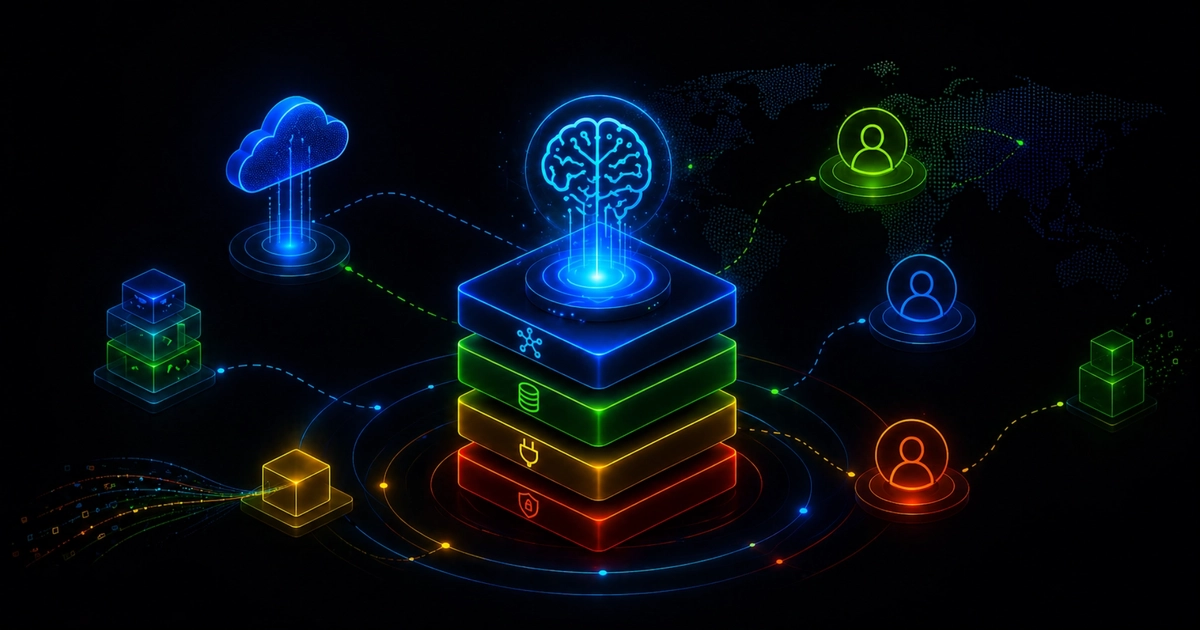
The Imperative for a Unified AI Productivity Architecture
In the current global economic landscape, the traditional model of remote work has reached a point of diminishing returns. CIOs and COOs are increasingly observing “productivity leakage,” a phenomenon where high-value human capital is squandered on navigating timezone latency and tool fragmentation. The reliance on synchronous communication—characterized by “Zoom fatigue” and endless status meetings—has created stalled velocity in cross-border operations.
To reclaim these lost hours, the enterprise must shift from synchronous chaos to algorithmic orchestration. The Enterprise AI Productivity Stack serves as the definitive architecture for this transition, moving the organization toward an intelligence-driven operating model that eliminates timezone friction and automates global handoffs. This is not merely an incremental tool upgrade; it is a fundamental reimagining of how hybrid global teams generate value.
The Canonical Framework for AI-Augmented Operations
1. Digital Unification Layer
By unifying these streams, leadership ensures that a developer in Singapore and a product manager in San Francisco are viewing the same real-time data without the need for a synchronous “catch-up” call. This layer is the prerequisite for all subsequent AI integrations, as it provides the clean, centralized data environment necessary for machine learning models to function effectively.
2. Asynchronous Governance Protocols
These protocols define how decisions are documented, how feedback is solicited, and how progress is tracked without requiring simultaneous presence. In the US market, this is critical for reducing “Zoom fatigue” in hybrid setups, while in APAC, it provides the structure necessary for bridging significant timezone gaps between regional hubs like Australia or Singapore and the US.
3. Agentic Workflow Integration
Rather than a project stalling for 12 hours while a team in one hemisphere sleeps, AI agents act as the “connective tissue,” moving tasks forward, updating dashboards, and flagging urgent blockers. This transition from manual to algorithmic orchestration is what allows for the realization of a 24/7 value creation cycle.
4. Adaptive Security Perimeter
The challenge for the modern CIO is to ensure that security does not become a bottleneck. The Adaptive Security Perimeter is designed to protect sensitive enterprise data and ensure compliance without hindering the speed of the Enterprise AI Productivity Stack.
Measuring Success: The KPI Matrix
- Workflow Velocity (Cycle Time Reduction): Measuring the speed at which a project moves from inception to completion within the AI-augmented framework.
- Cross-Border Latency (Handoff Wait Times): Quantifying the reduction in time lost during the transition of tasks between global regions.
- AI Adoption Rate (% of Workflows Augmented): Tracking the percentage of total organizational workflows that have been integrated with agentic automation.
- Compliance Risk Score (Data Sovereignty Adherence): Ensuring that the shift to global, asynchronous work does not compromise regulatory requirements or data sovereignty.
Regional Insights: Navigating US and APAC Dynamics
In the United States, the strategic focus is on maximizing innovation speed. Hybrid teams in the US are currently struggling with the “always-on” nature of synchronous work, leading to burnout. The stack addresses this by providing the tools for deep, focused work, unburdened by the requirement for real-time presence.
In the APAC region, the priority is bridging the physical and temporal distance between offshore operational centers and western headquarters. Managing offshore operational efficiency requires a robust Enterprise AI Productivity Stack to ensure that handoffs are seamless and that the “Follow the Sun” model actually delivers on its promise of continuous productivity.
Global Examples of AI-Driven Transformation
- US + APAC (Enterprise Software/SaaS): A global SaaS provider sought to automate its “Follow the Sun” support ticketing system. By integrating AI agents to handle ticket categorization and initial troubleshooting during regional handoffs, the organization reduced ticket resolution time by 40%.
- Germany (Manufacturing): A manufacturing leader implemented a hybrid collaboration platform that consolidated distinct ERP and messaging tools. By applying Asynchronous Governance Protocols, they eliminated 60% of synchronous status meetings, significantly improving Workflow Velocity.
- GCC/UAE (Financial Services): A financial services firm utilized AI-driven compliance monitoring to manage a remote workforce accessing sensitive data. By prioritizing the Adaptive Security Perimeter, they achieved 100% audit readiness while successfully expanding their global remote hiring program.
Conclusion: The Enterprise AI Productivity Stack
The transition from fragmented, synchronous bottlenecks and timezone latency to a unified, automated, and asynchronous global flow is no longer optional for the modern enterprise. The Enterprise AI Productivity Stack provides the necessary architecture to turn global distribution from a liability into a competitive advantage.
By following the Canonical Framework—starting with the Digital Unification Layer and culminating in an Adaptive Security Perimeter—organizations can eliminate “productivity leakage” and foster a high-velocity culture that operates 24/7. The future of the enterprise is not just “connected”; it is orchestrated by intelligence.
Executive Summary
- The Productivity Crisis: Global enterprises are suffering from “productivity leakage” caused by tool fragmentation, timezone latency, and excessive synchronous meeting fatigue.
- Strategic Transformation: Leadership must transition from merely “connected” remote work to an “AI-augmented” asynchronous operating model to unlock 24/7 value creation.
- The Framework: Implementation of the Enterprise AI Productivity Stack requires a four-step canonical approach: Digital Unification, Asynchronous Governance, Agentic Workflow Integration, and Adaptive Security.
- Quantifiable Impact: Strategic deployment targets critical KPIs, including Workflow Velocity and Cross-Border Latency, to eliminate handoff bottlenecks.
- Global Scalability: By automating cross-border handoffs, particularly between US and APAC hubs, organizations can achieve up to a 40% reduction in resolution times.
Key Takeaways
Operational Shift
Moving from fragmented, synchronous bottlenecks to unified, automated asynchronous global flow.
Regional Focus
Maximizing innovation speed in the US while bridging critical timezone gaps in APAC.
Technology Core
Deploying AI agents to manage repetitive handoffs and status reporting across time zones.
Governance
Establishing standardized rules for non-real-time collaboration to reduce meeting dependency.
FAQs: Enterprise AI Productivity Stack
1. How does the Enterprise AI Productivity Stack maintain data sovereignty in cross-border collaborations?
The stack utilizes an Adaptive Security Perimeter to implement dynamic, identity-based access controls that secure hybrid endpoints. This architectural layer ensures a high Compliance Risk Score by adhering to regional data sovereignty requirements while enabling seamless global workflows.
2. Our culture relies heavily on meetings; how do we manage the shift to asynchronous work?
The framework introduces Asynchronous Governance Protocols to establish standardized rules for non-real-time collaboration, effectively reducing “Zoom fatigue”. This shift is designed to eliminate “productivity leakage” and improve Workflow Velocity by replacing synchronous bottlenecks with algorithmic orchestration.
3. What specific metrics should we use to justify the investment in this stack?
Impact is quantified through the KPI Matrix, specifically focusing on the reduction of Cross-Border Latency and the increase in Workflow Velocity. For example, automating handoffs in a “Follow the Sun” model has demonstrated a 40% reduction in ticket resolution times.
4. How do we address the challenge of fragmented data across our US and APAC hubs?
The first step of the canonical framework is the Digital Unification Layer, which centralizes fragmented communication and project data into a single source of truth. This unified foundation is required before deploying Agentic Workflow Integration to automate handoffs between global regions.
5. Can this framework actually eliminate the 12-hour "black hole" during regional handoffs?
Yes, by deploying Agentic Workflow Integration, AI agents handle repetitive data entry and status reporting while primary teams are offline. This eliminates Cross-Border Latency and transitions the organization into a 24/7 value creation cycle.