
The Global Operating System
The Complexity Trap: Why Founder-Led Companies Stall
Scaling a company to 7 figures often relies on the sheer force of the founder’s will, intuition, and manual intervention. However, the tactics that secure the first million in revenue often become the liabilities that prevent reaching the 8-figure mark. This phenomenon is known as the “Complexity Trap. ” In this phase, manual oversight stifles speed, and reliance on tribal knowledge increases risk.
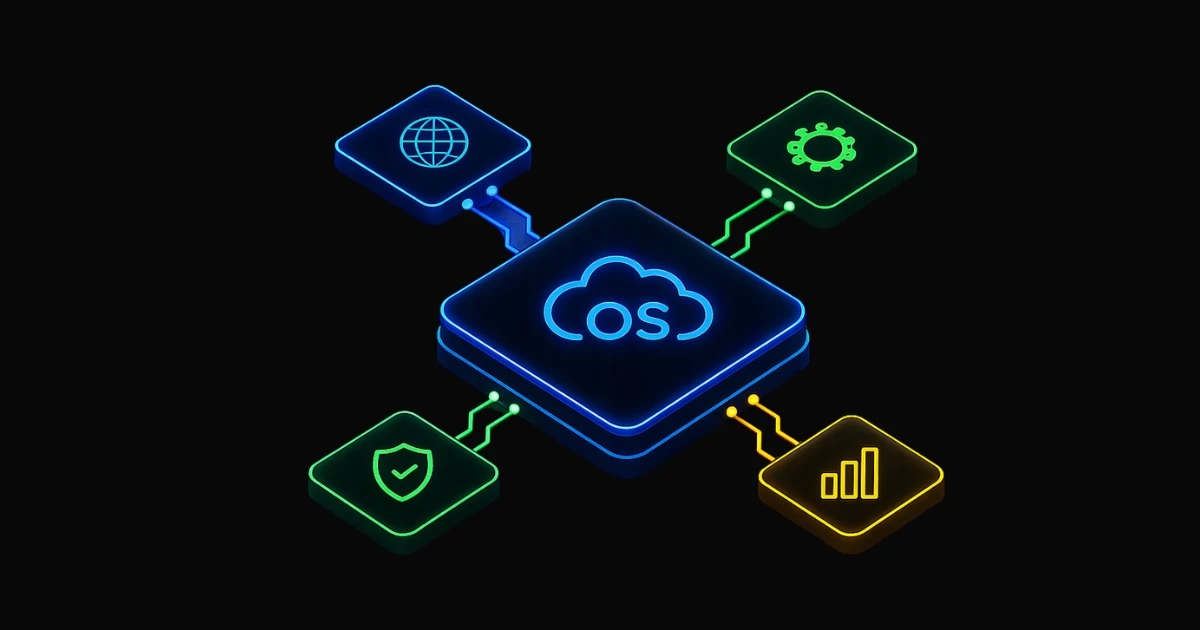
To break through this ceiling, leadership must pivot from pure sales acceleration to infrastructure development. This requires a sophisticated Enterprise Scaling Strategy focused on operational decoupling and systemic scale. The objective is not merely to sell more, but to build a machine that functions autonomously, freeing leadership for strategic capital allocation rather than day-to-day firefighting.
The Canonical Framework: A Blueprint for Autonomy
Step 1: Strategic Decoupling
Step 2: Process Architecture
Step 3: Intelligence Layering
Step 4: Talent Ecosystem
Step 5: Global Replication
The KPI Matrix: Governing the Transition
- KPI_1: Founder Detachment Rate This measures the percentage of revenue-generating activities that occur without founder intervention. A rising rate indicates successful Strategic Decoupling.
- KPI_2: Revenue Per Employee (Efficiency) As you scale, this metric should increase, not decrease. If headcount grows faster than revenue, the Process Architecture is failing.
- KPI_3: CAC:LTV Ratio (Scalability) This ratio validates the economic engine. A healthy ratio proves that the automated workflows in sales and success are driving sustainable growth.
- KPI_4: Operational Expense (OpEx) Variance Tight control over OpEx variance indicates successful Intelligence Layering and data governance.
- KPI_5: Decision Latency (Speed) The time it takes to go from data insight to execution. Reducing this latency is the hallmark of an agile, data-driven enterprise.
Regional Application: US and GCC/UAE Contexts
United States: Speed and Efficiency
GCC / UAE: Centralized Command
Global Examples: The System in Action
1. Scenario 1 (US / SaaS):
- Outcome: They achieved a 30% reduction in churn and a 2x increase in LTV. This demonstrates how an Enterprise Scaling Strategy directly impacts the bottom line by stabilizing the customer base.
2. Scenario 2 (GCC/UAE / Logistics):
Outcome: The firm realized a 40% efficiency gain in cross-border operations. This case highlights the power of centralized data governance in complex, physical industries.
3. Scenario 3 (EU/UK / FinTech):
Outcome: They recorded zero compliance breaches during a 3x revenue growth phase. This proves that speed and compliance are not mutually exclusive when the right systems are installed.
Conclusion
Scaling to 8 figures is not a function of working harder; it is a function of system design. By adopting a comprehensive Enterprise Scaling Strategy, founder-led companies can escape the Complexity Trap. The transition from a founder-centric model to a Global Operating System allows for operational decoupling, where revenue growth is finally divorced from the limitations of human effort.
Whether you are prioritizing capital efficiency in the US or building a centralized command hub in the UAE, the path to infinite scalability lies in the rigorous application of Strategic Decoupling, Process Architecture, and Intelligence Layering.
The infrastructure you build today determines the revenue you can capture tomorrow.
Executive Summary
- The Problem: High-growth, founder-led companies inevitably encounter the “Complexity Trap” at the 7-figure mark, where manual oversight and tribal knowledge become bottlenecks to further expansion.
- The Opportunity: Sustainable growth requires shifting from founder-dependency to a modular Enterprise Scaling Strategy that decouples revenue generation from leadership time.
- The Solution: Implementing a “Global Operating System” enables infinite scalability through standardized protocols, automated workflows, and unified data governance.
- The Framework: A five-step Canonical Framework—ranging from Strategic Decoupling to Global Replication—provides the roadmap for transforming fragmented operations into a self-healing infrastructure.
- The Outcome: The transition creates an autonomous enterprise capable of multi-region expansion, characterized by reduced decision latency and optimized capital allocation.
Transformation Statement:
Key Takeaways
Operational Decoupling
Growth stalls until founder IP is extracted into standardized protocols.
Data Governance
Real-time analytics must replace intuition to reduce decision latency.
Regional Nuance
A successful Enterprise Scaling Strategy adapts to market specificities, from US capital efficiency to GCC relationship-driven hubs.
Talent Structure
Shift from local hires to a distributed, meritocratic workforce aligned with global standards.
FAQs : The Global Operating System
1. How differs this system from standard process documentation or SOPs?
Unlike static documentation, this approach utilizes Process Architecture to engineer rigid, automated workflows that trigger without human intervention. The goal is Strategic Decoupling, where founder IP is not just recorded but embedded into a self-healing infrastructure that functions independently of manual oversight.
2. Will stepping back from daily operations increase execution risk?
On the contrary, the “Complexity Trap” creates risk through reliance on fragile “tribal knowledge. ” By implementing Intelligence Layering, you replace intuition with unified data governance, drastically reducing Decision Latency and giving you superior, real-time control over the enterprise.
3. How do we measure the ROI of this transformation?
We look beyond simple revenue growth to specific structural health metrics like the Founder Detachment Rate and Revenue Per Employee. A successful implementation increases your CAC:LTV Ratio, proving that your economic engine is scaling efficiently without requiring a linear increase in leadership effort.
4. Is this framework applicable to both US and GCC market contexts?
Yes, the Global Replication step is designed to “copy-paste” a validated operating model into new geographies while respecting local nuances. For example, the system adapts to prioritize high-leverage capital efficiency in the US, while establishing centralized command hubs for relationship-driven scaling in the GCC/UAE.
5. Does this operating system require restructuring our workforce?
It requires evolving to a Talent Ecosystem model, where hiring is based on global performance standards rather than local proximity. This shift enables a distributed, meritocratic workforce capable of executing standardized protocols to support 24/7 operations and systemic redundancy.